A corporate event works when the reason for gathering is settled first — then the room, the layout, the food service, the schedule, and the vendor plan can all pull in the same direction.

Plan a corporate event in Marion, Indiana by naming the outcome first, then matching the venue layout, guest path, food service, vendor timing, and guest communication to that one purpose. Bring your date, guest count, program, and AV needs to the venue tour so the walkthrough answers real questions instead of general ones.
Purpose First
Corporate event planning should begin with the reason people are gathering. Once you know what guests need to learn, celebrate, decide, support, or remember, every other decision has something to measure itself against.
Local events suit companies, nonprofits, schools, churches, and regional teams that want a polished gathering without moving everyone into a larger metro area. For guests who live or work in Grant County and nearby communities, a Marion event is easier to attend and more connected to the people in the room. The planning still needs care. A local event should never feel casual by default.
The quickest way to make an event feel assembled is to start with tables and decorations before the goal is clear. A training day, awards dinner, fundraiser, client appreciation night, board retreat, and holiday party all ask the room to do different work. Training needs focus — clear sightlines, good sound, space to take notes, breaks that don't kill momentum. An awards dinner needs a focal point, a clean path for honorees, and a meal schedule that doesn't cut across recognition. A fundraiser needs check-in, storytelling, sponsor displays, giving moments, and auction areas that read at a glance. A celebration needs room for appreciation, conversation, food, photos, and easy movement.
Write one sentence that names the purpose. Something as plain as "This event should thank our employees and give them an easy evening together" or "This dinner should help donors understand the work and feel invited to support it." That sentence becomes the filter for everything after it.
Then turn it into a working brief before the details scatter across emails and text threads. Include the audience, event type, target date range, estimated guest count, decision makers, food style, program needs, AV needs, and any internal approval steps. One short document keeps leadership, vendors, and the venue aligned without turning the process into a stack of disconnected checklists.
The Covenant Place publishes private event pricing separately from its wedding packages, which gives corporate planners two clear starting points:
- The Intimate — catering area only, comfortably holding 50 to 60 people. $300 plus sales tax for a five-hour package, $75 plus tax per additional hour.
- The Signature — the complete venue, for events other than weddings. $2,000 for five hours, $500 per additional hour.
Standard rental includes tables, chairs, backdrops, catering tables, cocktail tables, and basic setup and breakdown of all furniture. Private events also receive vendor recommendations, timeline assistance, setup guidance, and on-site coordination on the day. Sunday through Thursday dates are the simplest to arrange; Friday and Saturday need at least three months' notice.
Layout Follows Purpose
A flexible private venue matters because corporate events rarely fit one standard setup. Smaller space for intimate gatherings and complete-venue rental for larger non-wedding events gives you room to shape the event around the audience instead of forcing every gathering into the same arrangement.
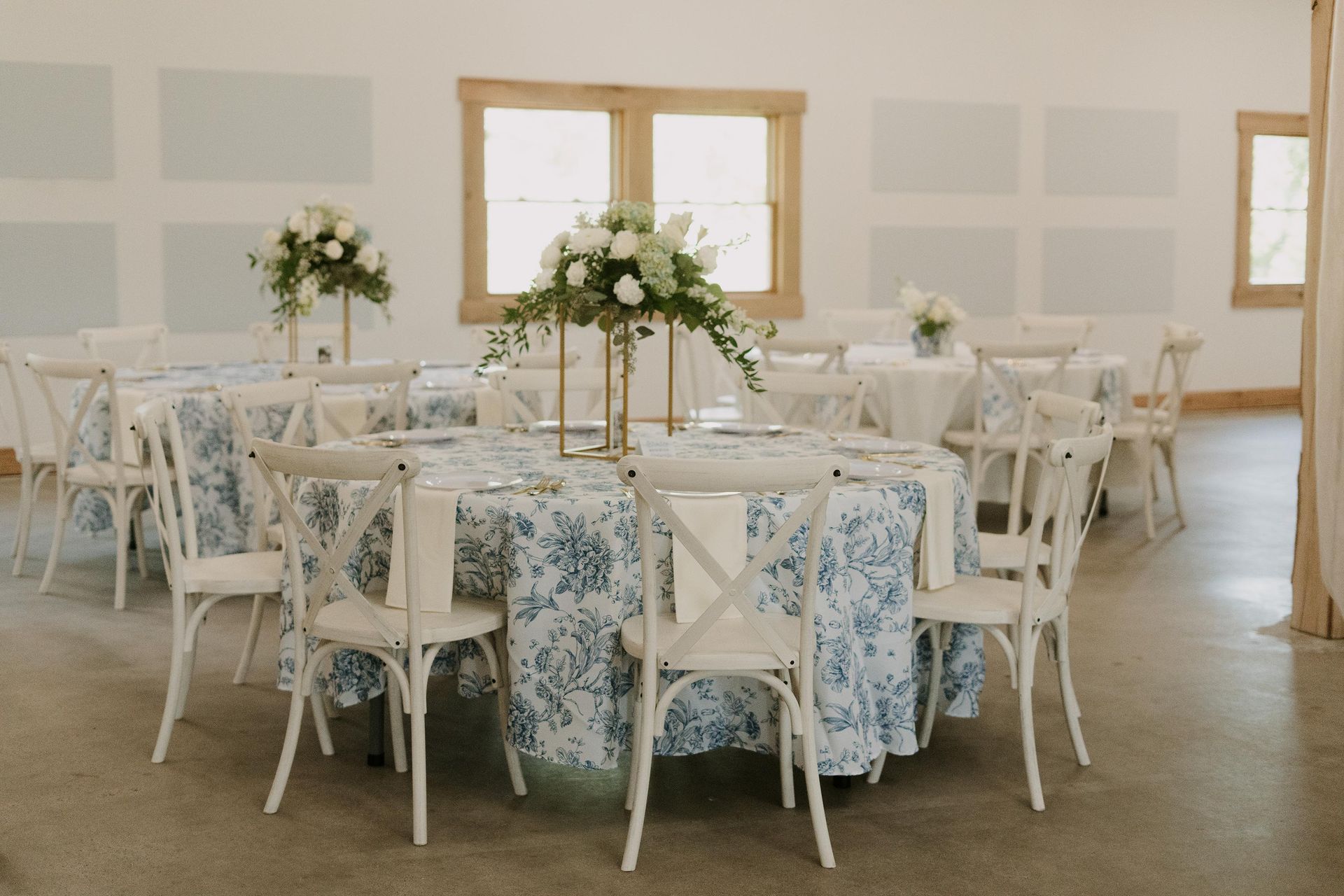
Meetings and training need practical sightlines, refreshments placed where they won't distract, and seating that fits the level of participation. Round tables help discussion. Classroom-style seating helps focused instruction. A U-shape lets a leadership group talk while still facing a speaker.
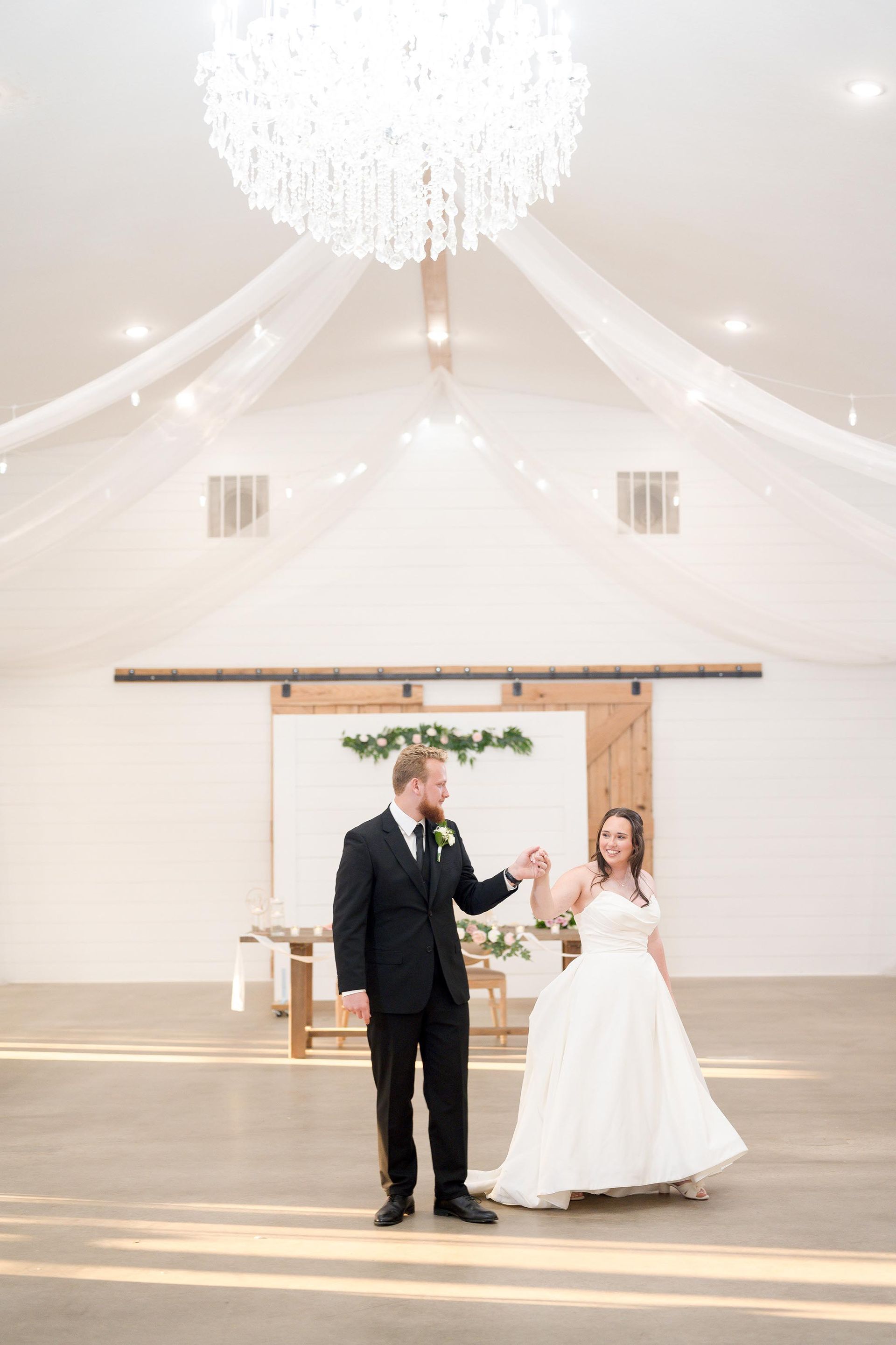
Banquets need a different energy. Guests should feel hosted from the moment they enter, and the speaker, honorees, meal service, and dessert should each have a natural place in the room. The indoor reception hall at the modern barn venue carries neutral features, natural light, and a chandelier — a polished base for company colors, sponsor signs, seasonal decor, or a recognition display.
Fundraisers and community events have the most moving parts. A sponsor table, auction display, registration area, meal plan, giving moment, and program all need space. Walk the room from a guest's point of view and notice whether each next step feels obvious without being explained.
| Event Type | What the Room Has to Do | Layout Implication |
|---|---|---|
| Training | Hold attention for a long stretch and support note-taking. | Sightlines to the presenter, work surfaces, refreshments off to one side. |
| Awards dinner | Give honorees a clean path and the room a focal point. | Defined stage area, meal service timed around recognition. |
| Fundraiser | Make check-in, the story, and the giving moment easy to follow. | Registration, sponsor and auction space, a program with clear order. |
| Client appreciation | Encourage conversation and unhurried movement. | Open floor, food stations, seating that invites mingling. |
| Board retreat | Let a small group talk and still face a presenter. | U-shape or rounds, quieter space, breaks close at hand. |

Parking to Goodbye
The guest experience starts well before anyone sits down. People need to know where to park, which entrance to use, where to check in, where to leave coats or materials, where to find food and drinks, and where the main program happens.
That path matters for every event, and more still when guests don't all know each other. Employees bring spouses. Donors meet staff for the first time. Board members welcome community partners. A clear path gives people confidence before the program begins.
Picture the first twenty minutes while you're still planning. Who greets guests at the door? Where do name tags go? Will guests receive a program, drink ticket, place card, or auction number? Where will they naturally gather? If everyone arrives in one wave, does the entrance still feel calm? These read as small details on paper and become very visible in the room.
Carry the same thinking through to the end. Guests should understand when the program is over, where dessert or coffee is served, and how the evening closes. An event doesn't have to be formal. It does need a beginning, a middle, and an end.
Guest communication should mirror that path. Send the location, arrival time, parking note, meal expectations, dress context, and contact person in one clear message. If the event includes a registration table, sponsor display, silent auction, award presentation, or group photo, tell people what they need to understand before they arrive.
Food, Drinks, Vendors
Food service sets the pace for most corporate events. A plated dinner creates a natural program structure. A buffet serves a large group well when the line has room and table release is planned. Stations support mingling, but they need enough space and staffing to avoid congestion.
The Covenant Place includes a separate catering space connected to the main event setting, which keeps food staging out of the guest area and leaves the reception room cleaner. It also makes the catering conversation more specific. Ask how caterers usually load in, where they stage, which serving positions work best, and how cleanup is handled — and confirm whether outside caterers are permitted for private events, since the published private event packages don't spell that out.
Vendor timing belongs in writing. Confirm arrival time, setup needs, power needs, and an on-site contact for the caterer, speaker, florist, photographer, DJ, musician, rental company, and AV provider. Ask what sound and presentation equipment the venue itself provides, and what you'll need to bring, before you promise anyone a slide deck. If the event includes bar service, ask about alcohol rules early — the venue's published beer, wine, and licensed bartender requirements apply to weddings, so confirm what applies to a private event rather than assuming it carries across.
Local, Not Lowered
Hosting in Marion is a practical choice for teams that want the gathering close to their people. It makes attendance easier for employees, board members, volunteers, donors, families, and regional partners who already live nearby, and it ties the event to the community rather than a rented ballroom two hours away.
Match that connection with a thoughtful room plan. The Covenant Place's modern barn setting gives you an indoor room, outdoor surroundings, and a private venue experience — a combination that suits a leadership retreat, appreciation dinner, training day, community fundraiser, or holiday party when the event is planned around people rather than a template.
Use the room's natural strengths. If the light is good at a particular hour, schedule photos or the welcome then. If the chandelier anchors the space, place the program where the focal point supports it. If the outdoor surroundings are part of the appeal, use them for arrival, photos, or a short break when the weather allows, while keeping the main plan comfortably indoors.
Make the Tour Work
The goal of a tour isn't to collect a long list of rules. It's to find out whether the venue can support the event you actually want to host.
Frequently Asked Questions
What types of corporate events can use a private venue?
Training, workshops, board dinners, staff celebrations, awards banquets, fundraisers, client appreciation events, holiday parties, and leadership retreats all work in a private venue.
How do I choose the right layout for a corporate event?
Start with the purpose, then match the layout to the activity. Training needs sightlines and work surfaces. Banquets need meal flow and a focal point. Social events need space for movement, photos, and conversation.
What should I bring to a corporate event venue tour?
Your target date, estimated guest count, event purpose, preferred schedule, food plan, AV needs, decor ideas, and questions about access time, furniture, vendor movement, parking, and alcohol rules.
What information should corporate event guests receive before arrival?
The venue name, arrival time, parking instructions, meal expectations, dress context, schedule highlights, and the best contact person for event questions.
Can The Covenant Place host small and larger corporate events?
Yes. The Covenant Place publishes options for smaller gatherings using the catering area and complete-venue rentals for non-wedding events, with capacity depending on layout and event style.
If you're planning a meeting, retreat, training day, fundraiser, or company celebration in Marion, start with the corporate event venue details, then walk the space, test the layout, and shape an event that feels well hosted from arrival to goodbye.