Modern barn decor works when it feels edited rather than added. Start with the room's own architecture, light, and focal points, then bring in the pieces that make the day feel warm and finished without crowding the space.

Design a modern barn wedding by working from the venue outward: read the room's architecture, light, and existing focal points first, choose one focused palette and repeat it in small ways, use lighting and texture instead of volume, place florals where guests are already looking, and confirm what can be hung, attached, or lit before you order anything.
What Modern Means
Modern barn style doesn't have to feel cold, plain, or of-the-moment. It also doesn't have to lean on every rustic prop people associate with barn weddings. A barn reads as modern through clean lines, repeated materials, warm light, restrained florals, generous spacing, and details that look like they belong in the room rather than like they arrived in a box.
In practice it's usually a series of small substitutions.
| Element | Barn Default | Modern Alternative |
|---|---|---|
| Signage | Distressed wood with painted script. | Black or brushed frames, one typeface, plenty of margin. |
| Table linen | Burlap runners and lace overlays. | Washed linen in a single tone, letting the fabric be the texture. |
| Vessels | Mason jars, tins, mixed found containers. | Clear glass, ceramic, or bud vases repeated down the table. |
| Candlelight | Clustered wherever there's space. | Fewer candles, placed with room around them. |
| Ceremony | Every pew, post, and doorway dressed. | One strong focal point, and restraint everywhere else. |
None of this is a rule, and the rustic version is a legitimate choice — it's simply a different one. What matters more than the style label is that the finished room stays hospitable. Guests should notice the beauty, then sit down, eat dinner, find the bar, and get to the dance floor without navigating around anything.
Start With the Room
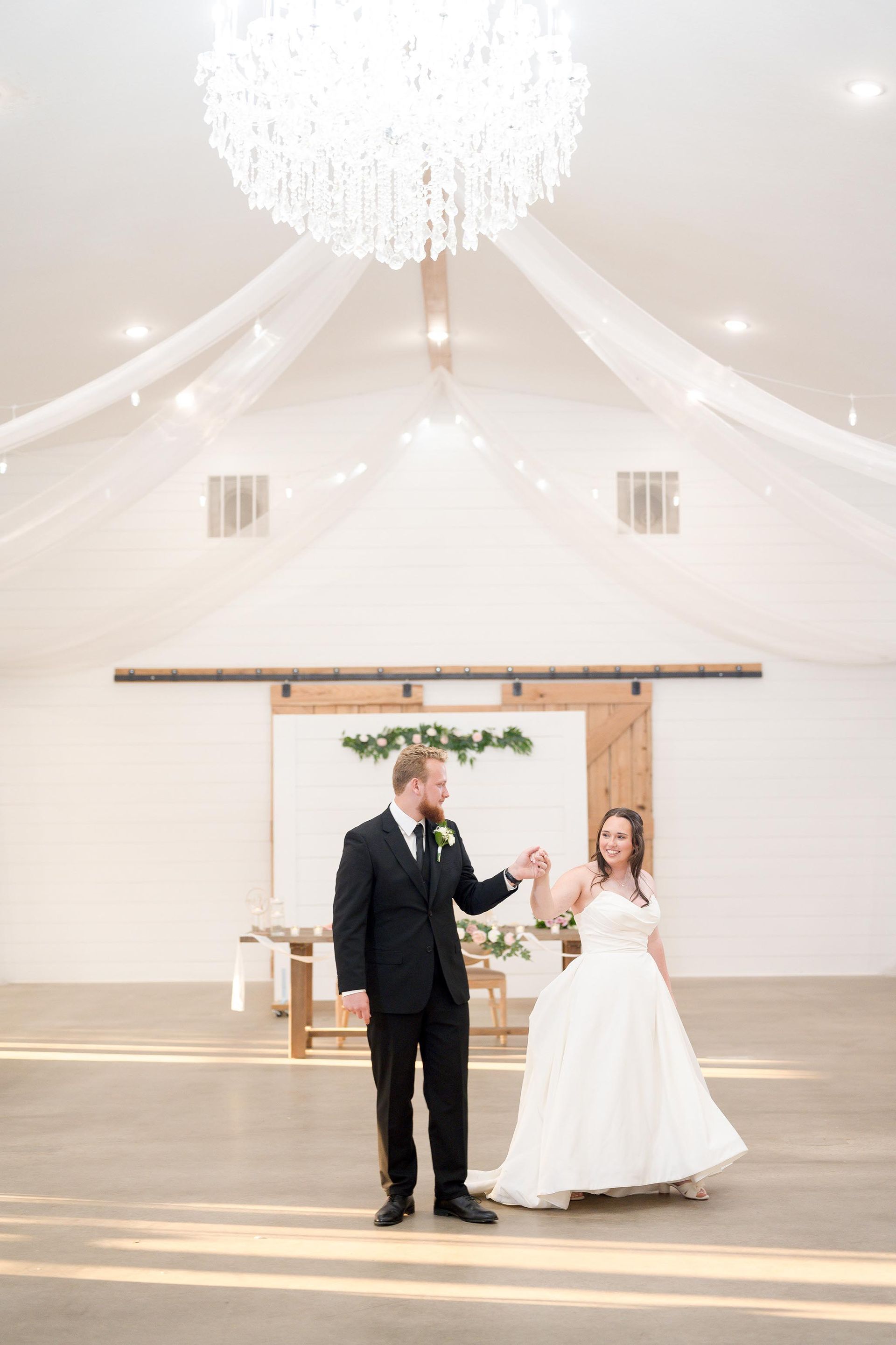
Before choosing colors, centerpieces, or signage, study the space you've actually booked. The venue galleries are the fastest way in: the indoor images show the reception hall, ceiling lines, window light, tables, and dance floor, while the outdoor images show the garden, pergola, ceremony setting, grounds, and portrait areas.
A modern barn isn't an empty box. It arrives with height, texture, and a sense of place. Buy decor before you understand those things and it's easy to spend real money filling a room that already had enough character — or worse, competing with it.
Then walk the day in order. Guests arriving, finding the ceremony, moving toward cocktail hour, entering the reception, finding their seats, visiting the bar, signing the guest book, moving to the dance floor. The places where guests pause are the places where decor earns its money. Everywhere else, it's mostly working for the camera.
Palette, Then Texture
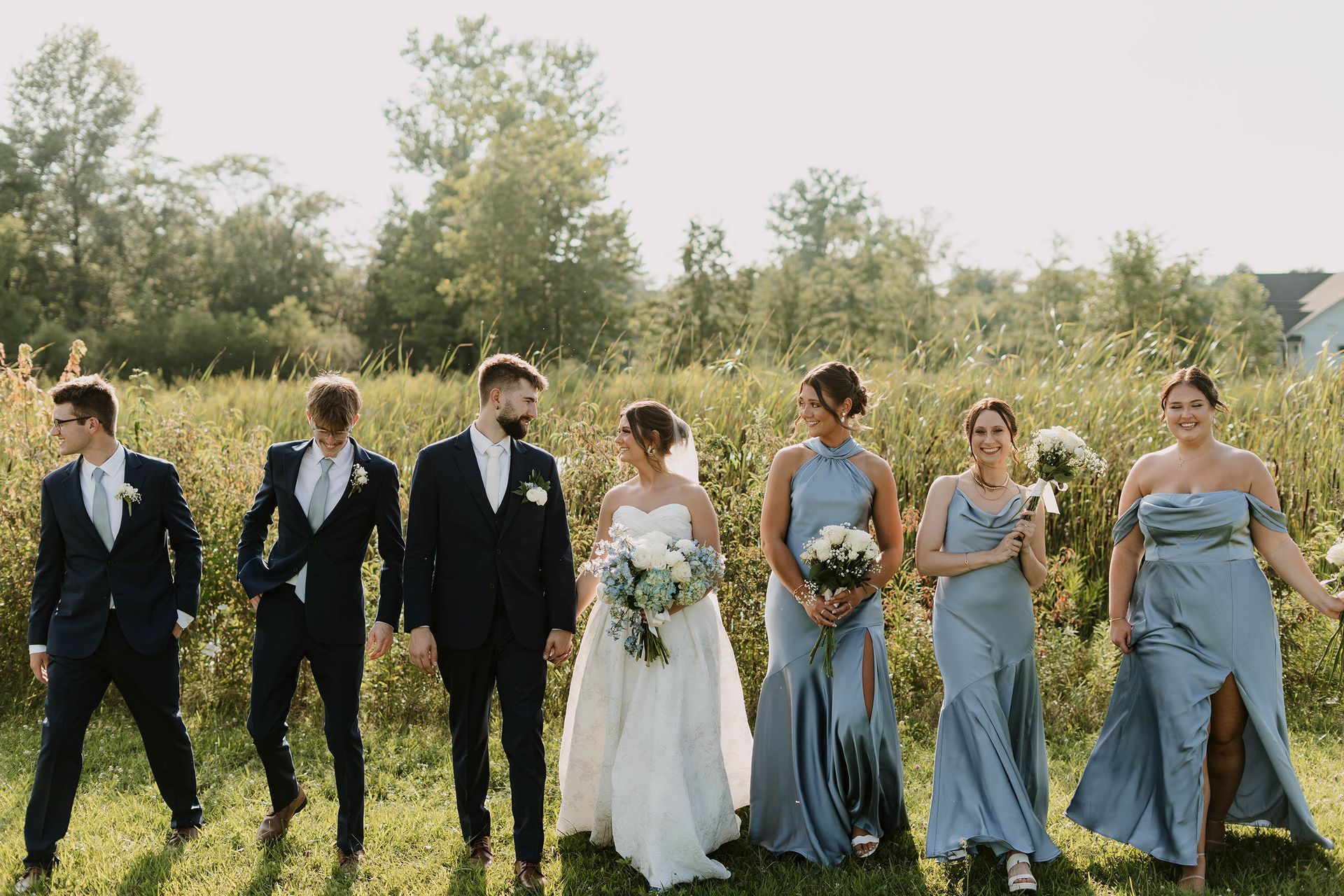
A polished barn wedding usually holds together better with a focused color story than a long list. One light base, one natural tone, one accent is enough. Soft white, warm ivory, champagne, sage, black, muted blue, clay, and brushed gold all work depending on season, attire, flowers, and the barn's own interior tones.
The accent should repeat in small ways rather than appear once at full volume. If sage is the accent, it can show up in napkins, bridesmaid dresses, a few floral details, and the bar signage. If black is the accent, it lands in frames, table numbers, taper candles, and menus. That repetition is what makes a room look intentional, and it costs nothing extra — it's a decision, not a purchase.
The failure mode is letting every surface carry a different idea. When the ceremony sign, seating chart, bar menu, table numbers, and programs all feel related, the wedding reads as calm and cared for even if the individual pieces are simple.
Texture is what keeps a focused palette from going flat. The room already brings its own through wood tones, ceiling lines, and the view outside; your side of it is linens, ribbon, paper, flowers, candles, glass, ceramics, and fabric. Contrast is where the polish comes from — a light linen with a dark table number, a soft arrangement in a clean black frame, warm candlelight against neutral tableware. Repeat that contrast in a few places and it reads as designed rather than accidental.
This is also the easiest place to make the wedding personal without overdecorating. A photo display, a custom bar menu, a monogrammed napkin, or a family recipe card all work beautifully when they speak the same visual language as everything around them.
Let Light Work
Lighting is the most efficient way to make a barn reception feel modern, because it changes the whole room without adding a single object to it. The chandelier above the dance floor already gives the hall a natural center, and the rest of the reception design can take its cue from there.
On tables, soft candlelight or good battery candles bring warmth without visual clutter. Around the bar, dessert table, guest book, and seating chart, a little focused light does the wayfinding for you — guests find those areas without needing a sign to point at them. If you're hoping for outdoor evening portraits, ask your photographer how the light behaves at the time of year you're considering, since a June sunset and an October one produce very different photos from the same spot.
Confirm what's allowed before you design around it. Every one of these has a yes-or-no answer that changes what you can order:
- Open flame — whether real candles are permitted, and in what kind of holder.
- Hanging or suspended pieces, including anything overhead.
- Wall and beam attachments, and what fixing methods are acceptable.
- Use of existing fixtures, including whether anything can be hung from them.
- Install and removal windows — when your florist can start, and when everything has to be out.
A decor plan is only useful if it can be installed cleanly and removed on time. Ask at the tour, and get the timing in writing at the details meeting.
Florals With Intent
Flowers don't need to cover every surface to feel abundant. In a modern barn wedding they have more impact concentrated where guests are already looking: the ceremony focal point, guest tables, the sweetheart table, the bar, the welcome sign, the seating chart, and the cake table.
Outdoors, the setting does much of the emotional work on its own. With a pergola, garden landscaping, and church pews already in place, florals on the pergola, a few aisle pieces, and reserved signs for family may genuinely be enough. Restraint outside also photographs better, because nothing is competing with the landscape behind it.
Inside, match the arrangement to the table shape. Low centerpieces keep conversation open across rounds. Taller slim pieces can work where they don't sit in anyone's sightline — the usual planning default is to keep arrangements either below about twelve inches or above about twenty-four, so guests are looking under or over rather than through. Bud vases give softness without weight. Greenery is lovely and easy to overdo; it shouldn't crowd place settings, menus, or the space servers need.

Tables That Sit Well
Guest tables carry most of the reception's style, which makes the small choices there disproportionately important. The wedding packages list round tables, farm tables, chairs, catering tables, cocktail tables, and backdrop options, so there's a working foundation in place before any rental conversation starts.
Start with the table type. Rounds are social and easy to seat. Farm tables make a warmer head table, dessert display, guest book table, or family-style dinner. Mixing them can be beautiful where the floor plan supports it, which is a question about circulation more than aesthetics.
Then layer, but slowly. A linen, a folded napkin, a menu card, one small floral piece, a table number, and warm light is already a complete table. Chargers, place cards, favors, runners, taper candles, and specialty glassware are all lovely and all optional — each should earn its place. Family-style service needs room for shared dishes and bottles, so leave it; plated service frees up space for a more layered setting.
The test is simple. The table should feel good to sit at and good in photographs, in that order.
Style the Pauses
Decor isn't only flowers and linens. It's also everything guests actually use: the welcome sign, guest book table, seating chart, bar menu, card box, favor display, and dessert table. Tie them together with the same frame tone, paper color, typeface, or floral accent, and they stop reading as separate purchases.
Then put them where they're needed. A seating chart has to be findable before guests enter dinner, not after. A bar menu belongs where the line forms. A guest book wants a natural pause point rather than the corner everyone walks past. Where a wedding moves from an outdoor ceremony to an indoor reception, wayfinding matters more than usual — the most beautiful sign in the world isn't helping if guests don't meet it at the moment they need direction.
Before the Doors Open
The visual story starts hours before guests arrive, and the getting-ready spaces carry it quietly. The bridal suite includes dress hooks, a hair and makeup bar, seating, a coffee bar with a mini fridge, and a backdrop wall built for photos. The groom room has lockers, seating, a TV, an Xbox, a mini fridge, and a bar top.
Those rooms matter for detail photos and for the emotional pace of the morning, which is harder to plan and easier to ruin. Matching hangers, vow books, robe colors, ties, florals, and invitation pieces connect the morning to the ceremony and reception without any extra staging. Resist the urge to overstyle. A clean room with a few personal pieces photographs better than a crowded one, and it's a nicer place to spend four hours.
Edit Before You Order
Before buying anything, list the places where design will actually be seen, then compare that list against your venue tour notes.
- The ceremony focal point, which appears in nearly every ceremony photo.
- Guest tables, where people spend the longest stretch of the evening.
- The sweetheart or head table, which is photographed constantly.
- The seating chart and welcome moment, where guests form a first impression.
- The bar and the cake or dessert table, both natural gathering points.
- Getting-ready details, which carry a surprising share of the final gallery.
If a piece doesn't help guests, help the photographs, or change how the day feels, leave it out. Modern barn decor should feel warm, edited, and personal, and fewer pieces in the right places almost always look better than a large collection working to fill every corner.
The room still has to be somewhere people can eat, talk, dance, and celebrate comfortably. Hospitality is part of the design, not a constraint on it.
Frequently Asked Questions
How do you decorate a modern barn wedding venue?
Start with the venue's existing architecture, light, and setting. Then choose a focused palette, thoughtful table design, intentional lighting, ceremony florals, and signage that helps guests move through the day.
What colors work well for a modern barn wedding?
Soft white, ivory, sage, muted blue, black, champagne, clay, and brushed gold all work well. The right palette depends on the season, the flowers, wedding party attire, and the barn's interior tones.
Do barn weddings need rustic decor?
No. A barn venue can support modern, romantic, classic, garden-inspired, or formal styling. Burlap, mason jars, and distressed wood are options, not requirements.
Where should couples spend decor money first?
On the ceremony focal point, guest tables, lighting, the seating chart, the sweetheart table, the bar, the dessert display, and the getting-ready details that appear most often in photos.
Should couples tour the venue before choosing decor?
Yes. Tour first, take photos, ask what's included, and confirm what can be attached, moved, lit, or brought in. Then choose decor around the actual space rather than an imagined one.
Decor decisions get much easier once you've stood in the room and seen how the light falls in it. Bring your colors, your table ideas, your florals, and your ceremony plan, and look at them against the space they'll actually live in.